
Lyric Opera
Pathétique Melodramma
ABSTRACT — Pathetique Melodramma is a four-act opera conceived in structural dialogue with Tchaikovsky's Symphony No. 6 "Pathétique".
The work does not adapt or reinterpret the symphony. It inhabits its architecture.
Acts II and III unfold in direct correspondence with the four movements of the original score. The symphony is performed in its entirety — intact. The dramatic action aligns with its emotional progression, transforming symphonic time into theatrical time.
Beyond the symphony's final silence, a newly conceived Act IV emerges: an 18-minute Requiem — not a mourning, but a philosophical redefinition. Not requiem aeternam. Lux perpetua vivens.

Pathetique Melodramma — libretto, first edition 2018. Deposited at SIAE,
December 27, 2017.

A STORY OF A THRUTH LOVE — 6th century AD. The fortified city of Dara, on the northern edge of Mesopotamia.
Kandal returns after ten years of exile. The city has condemned him.
One person has waited. Kemal. Their bond is not sentimental. It is existential — two halves of a single soul, separated by law, by power, by the world they were born into.
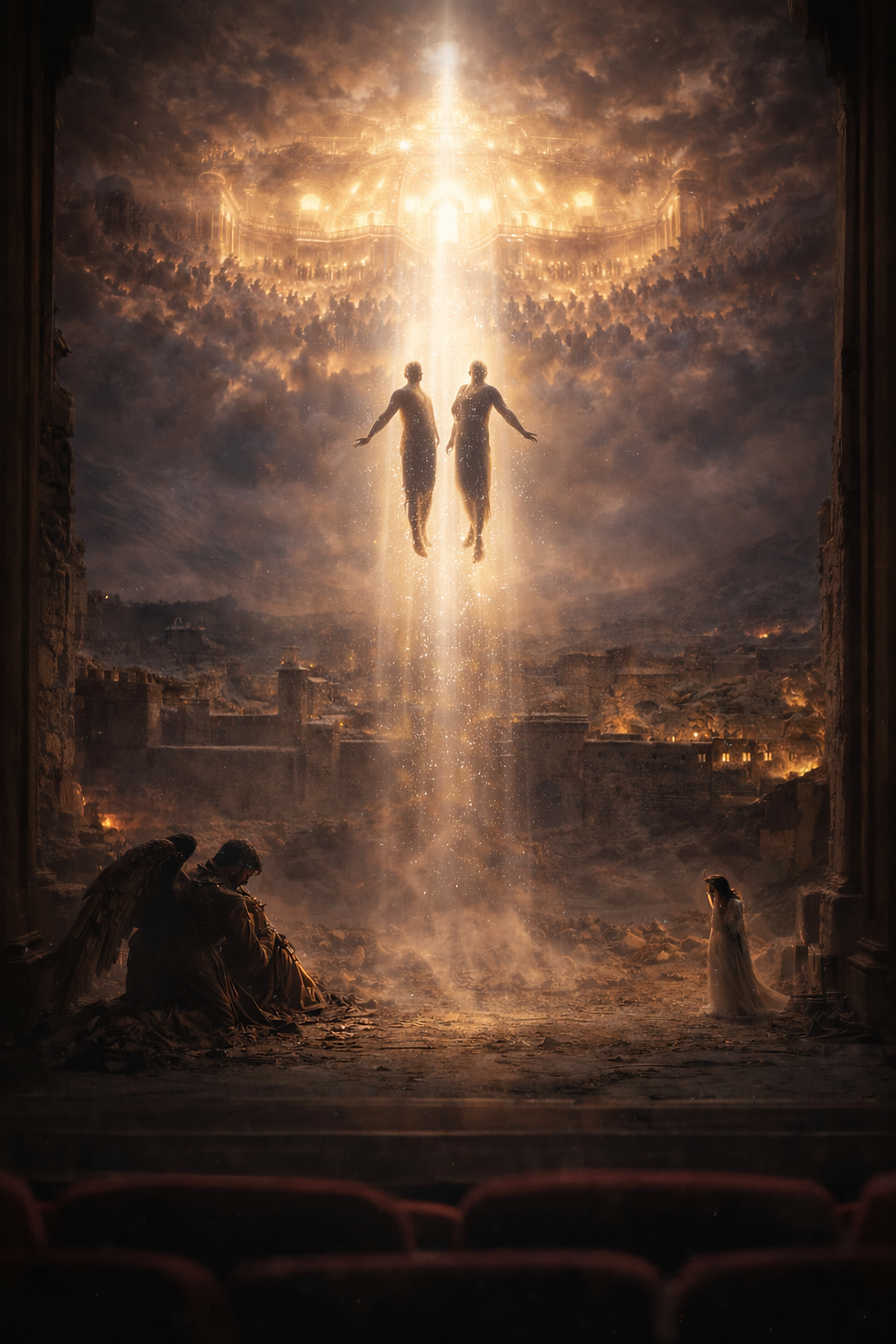
Above them moves Najro — an arcane angelic presence, the metaphysical face of love itself — who watches, intervenes, and ultimately accepts what cannot be changed.
The tragedy is not a punishment. It is a structural necessity.
Because the opera does not end with death.
It ends with what remains when time can no longer contain love.


"Mai nessuno conoscerà il segreto di questa sinfonia, all'infuori di me stesso"
P.I. Tchaikovsky, ottobre 1893
Dramaturgy
Act I — Overture. A pre-temporal threshold. The conditions of the drama before the drama begins.
Act II — The World. Life, desire, power and illusion. Tchaikovsky's Symphony No. 6, movements I–II.
Act III — The Fracture. Impossibility, loss, death. Tchaikovsky's Symphony No. 6, movements III–IV.
Act IV — Requiem "Ex Tenebris Vita". The metaphysical completion. An original 18-minute work for voices and orchestra, conceived as the necessary consequence of the symphony's final silence.
The Symphony remains entirely intact. The Requiem reveals the dimension already present in its silence.

Call for Composition
Act IV Requiem-
Ex Tenebris Vita
Opening: 01 September 2026 — €24.000
"La mia ultima Sinfonia è intrisa di un'atmosfera non diversa da un Requiem, particolarmente nel tempo finale"
P.I. Tchaikovsky, ottobre 1893
Press

With Maestro Valery Gergiev — one of the first conversations about the project.
"Creador apasionado y
pensatore encansable"
EL MUNDO, Carmen Fernandez 2004
"Un autore capace di muovere immagini che arrivano al cuore"
BAFF, John Savage 2011

With Maestro Ezio Bosso — a meeting that confirmed the direction.
GENESIS —
On June 21, 2017, I walked into the Conservatorio G. Verdi in Milan for a friend's piano recital. At the last minute, the director of the Fondazione Società dei Concerti asked the conductor to add one piece. Something he loved above everything else.Tchaikovsky's Symphony No. 6. "Pathétique." The first note opened something. Images arrived. Names. A city — Dara, 6th century AD, Mesopotamia. Two men whose love the world could not contain. An angel trying to bend time itself to save them. I had never heard these names before. I wrote everything down that evening. A few days later, sitting beside my father as he was preparing to leave this world, those names and images released the words they had been carrying. He died on August 16, 2017. The libretto was completed on December 27, 2017.
A Riccardo, mio padre.
Alle mille ineffabili parole sue, racchiuse
in un imperfetto silenzio musicale.
G. Giadima, 2017